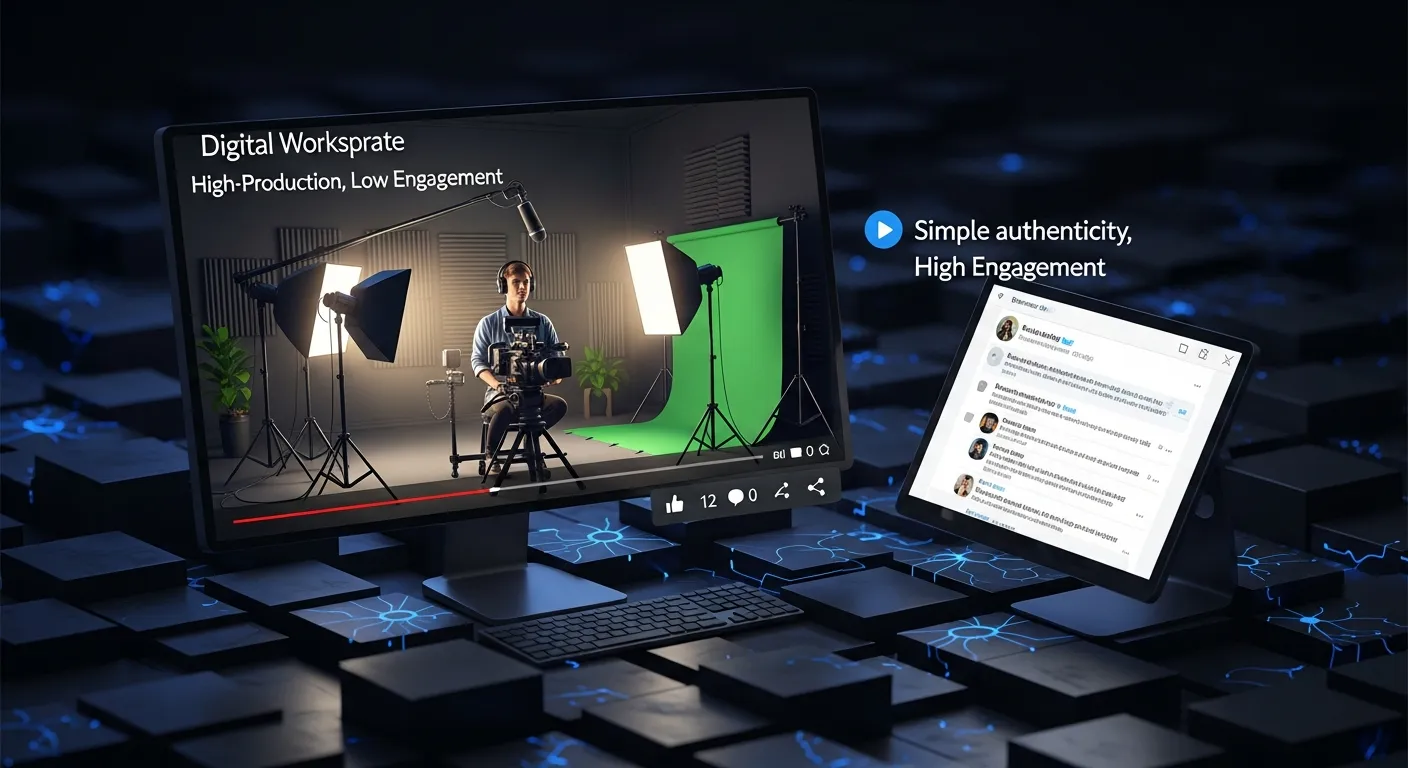
Why Your SaaS Videos Flop (And How to Fix It)
Spending hours on polished SaaS videos with zero conversions? The problem isn't your camera or editing skills. It's where your ideas start.
The Painful Truth About SaaS Video Marketing
You've probably been there. You block off half your week to film a video. You tweak the lighting. You re-record the intro six times. Then you post it — and hear crickets.
It's one of the most demoralizing feelings in SaaS marketing. You did everything right, and nothing happened. So what went wrong?
The answer might surprise you. It's rarely about production quality. It's about where the idea came from in the first place.
The Hidden Cost of Starting With Video
Think about how most founders approach video content. They brainstorm a topic, write a script, set up a camera, record, edit, and publish. That whole process eats three to four hours minimum.
Now ask yourself: how do you know anyone wants to watch that topic? You don't. You're guessing.
This is the core problem. When you start with video, you're investing serious time into an unproven idea. If the concept doesn't land, you've burned hours on content that goes nowhere.
Compare that to writing a short post or tweet. That takes maybe fifteen minutes. If nobody engages with it, you've lost almost nothing. If it takes off, you've just found a proven idea worth expanding.
What the Data Actually Shows
One SaaS founder tracked his video results carefully over six months. He made over 40 videos and spent roughly 150 hours on them. His average video pulled in around 180 views. His direct customer conversions from all that work? Zero.
But here's where it gets interesting. When he compared his best-performing videos against his worst, the difference had nothing to do with editing or camera presence. Every top performer started as text first — a tweet thread, a blog post, something that had already earned engagement.
One example stood out sharply. He made a quick screen recording of a tweet thread he'd already written. It took about fifteen minutes. That video got 2,400 views, sparked four meaningful direct messages, and led to two product trials.
That same week, he published a carefully filmed four-hour production. It got 87 views and zero engagement.
That gap isn't a fluke. It's a pattern that shows up again and again in content marketing.
Why Proven Text Ideas Win on Video
When a tweet or post gets engagement, it's telling you something valuable. Real people found the idea interesting enough to respond. That's market validation, just in a different format.
When you turn that text into a video, you're not guessing anymore. You already know the hook works. You already know the angle resonates. You're just changing the delivery method.
Think of it like product development. No smart founder builds a full product before checking if anyone wants it. They test the concept first with something small — a landing page, a survey, a quick prototype. Content works the same way.
Text is your prototype. Video is your full launch. Don't skip the prototype stage.
The Authenticity Factor Nobody Talks About
Here's something the polished-video crowd gets wrong. Audiences for SaaS content aren't looking for cinematic production. They're looking for useful, honest information from someone who knows what they're talking about.
A raw screen recording from a founder who clearly knows their stuff will almost always beat a slick, scripted video that feels rehearsed. Why? Because authenticity builds trust faster than polish does.
When you over-produce a video, you actually create distance between yourself and the viewer. It starts to feel like an ad rather than a conversation. And people tune out ads.
A slightly rough-around-the-edges video that gets straight to the point feels real. It feels like a person talking to another person. That's what drives engagement and, eventually, conversions.
A Smarter Workflow for SaaS Founders
So what does a better content process actually look like? Here's a practical approach that cuts wasted time and boosts results.
Step 1: Write the Idea First
Before you touch a camera, write the concept as a short post. Keep it under 300 words. Share it on Twitter, LinkedIn, or wherever your audience hangs out. Give it 24 to 48 hours.
Step 2: Let Engagement Be Your Filter
If the post gets meaningful engagement — comments, shares, replies — you have a winner. If it gets ignored, move on. You've just saved yourself three to four hours of video work on a concept nobody cares about.
Step 3: Turn Winners Into Videos
Now you film. But keep it simple. A screen recording, a talking-head clip, or even a narrated slide deck works fine. Your goal is to expand on the idea, not to win an award for cinematography.
This approach can bring your average video production time down from four hours to under thirty minutes. And because you're starting with a proven concept, your results should improve, not decline.
Step 4: Match the Format to the Platform
One mistake many founders make is posting the exact same video everywhere. Each platform has its own culture and format expectations. A vertical short-form clip works on TikTok and Instagram Reels. A longer horizontal video works better on YouTube. A punchy clip with captions works on LinkedIn.
You don't need to re-record everything. But you should trim, reframe, or adjust the presentation to fit where it's going. Cross-posting the same file without any changes usually underperforms everywhere.
Platform Algorithms and Why They Matter
This is something most content advice skips over. Platforms don't just show your video to your followers. They test it with a small initial audience and watch how people respond. If early viewers watch most of it, the algorithm pushes it further. If they click away fast, it gets buried.
This is another reason starting with proven text ideas helps. Content that already resonated with your audience tends to hold attention better on video too. You're not just guessing at a hook — you know it works because real people already told you so with their engagement.
Timing matters here too. Posting when your specific audience is active makes a real difference in that early-push window. Most platforms show you when your followers are online in the analytics dashboard. Use that data instead of posting whenever it's convenient for you.
The Burnout Problem Nobody Warns You About
There's another cost to the old approach that doesn't show up in view counts. It's burnout.
When you spend four hours on a video and get 87 views, it doesn't just waste time. It chips away at your motivation. Do that enough times, and you start dreading content creation entirely. Many founders quit video altogether at this point, which is a shame because the strategy itself wasn't wrong — just the execution.
The text-first approach solves this too. When you only invest heavily in ideas that have already shown promise, your success rate climbs. More wins mean more motivation. More motivation means you keep going. That compounding effect matters more than any single viral video.
The Real Question to Ask Yourself
Before you plan your next video, ask yourself one thing: has this idea already worked somewhere in a simpler format?
If yes, great — take it to video. If no, write it first. Share it. See if it breathes. Then decide.
This one shift changes everything about how you approach content. You stop treating video as the starting point and start treating it as the reward for ideas that already earned attention. Your time goes further. Your results improve. And you stop dreading Monday morning script sessions.
The best SaaS content doesn't come from the most polished studio setup. It comes from founders who know what their audience actually wants — and who found that out before they ever hit record.
Share this article
Join the newsletter
Get the latest insights delivered to your inbox.